Flying to South Korea, Lufthansa was the first to expose me to Korean food serving Beef Bugogi, rice and Kimchi. It was surprisingly good and the Kimchi fired up my tastebuds. Kimchi by some is considered the Korean version of Sauerkraut - as a Sauerkraut lover I would say both foods don't have much in common except for the cabbage used. Many households in South Korea produce their own Kimchi and have a fridge only for it.
After landing I headed to Seoul and took some rest at EJ's place before we headed out to a neighbourhood "Granny Kitchen". We had to wait a couple of minutes as the place was still full. You can find those little kitchens everywhere in South Korea where elderly ladies cook. We got a small table and immediately before we had the chance to order anything, a server arrived with Hanjeongsik - a full course Korean meal with many little bowls that contained different dishes: vegetable, kimchi, seafood, seaweed. EJ ordered rice and fish for us. I could try all and find out what I like and what not. What we liked we ordered more of. The fish had lots of bones and EJ prepped it for me as my fingers had to get used to Korean chopsticks. As normal in these and other restaurants in Korea we paid for the fish (main dish) and the side dishes were included.


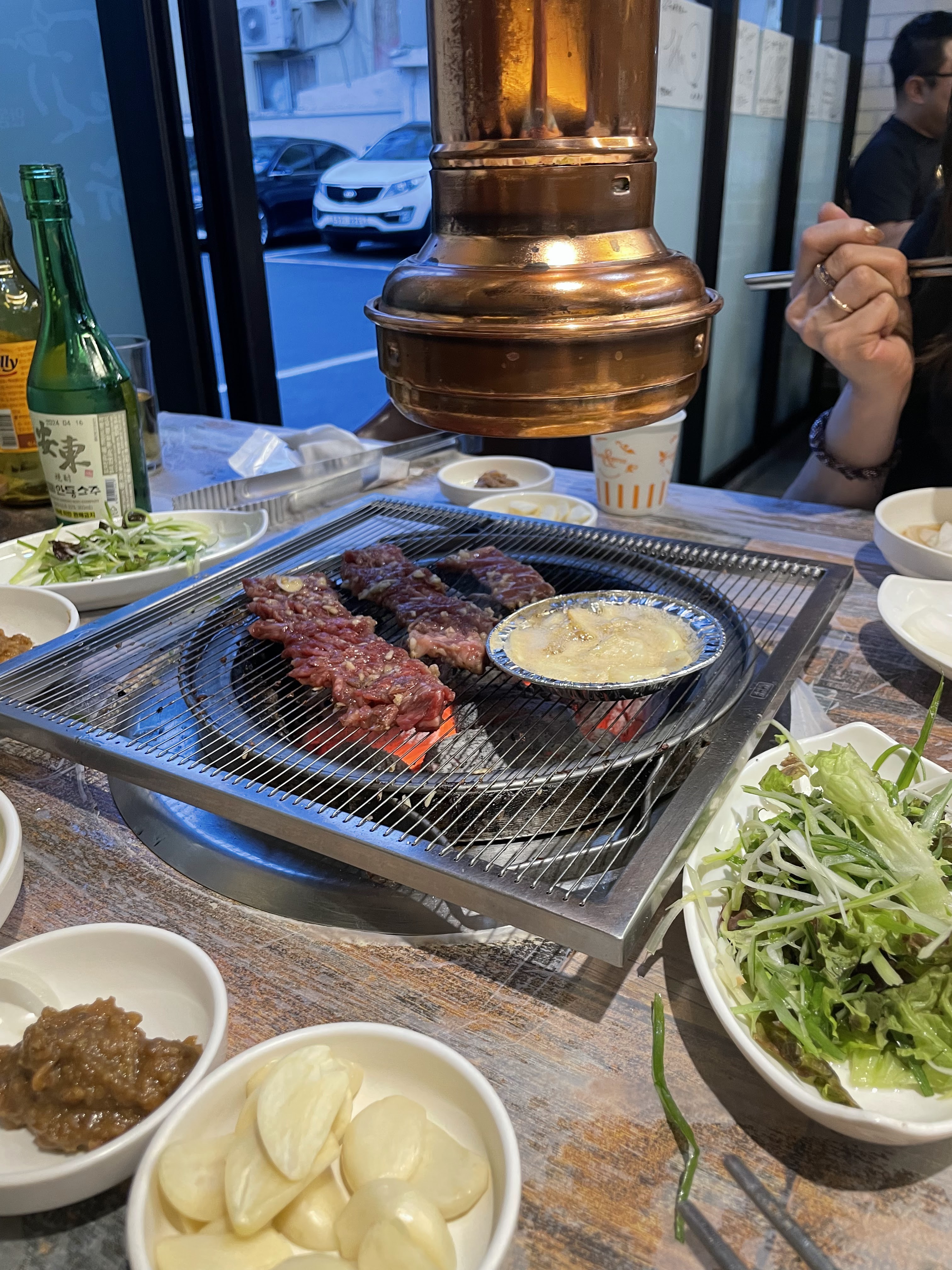
Saturday night I met my old colleague Evelyn who introduced me to Korean Barbecue - my favourite food on the peninsula. Every table comes with a grill in the middle. Then you make a selection for the meat you want (beef or pork, on Jeju also black pork) and then you can either grill it yourself or a server will do it for you. The most interesting and shocking moment comes, when they cut the meat with scissors and turn it into bite sized pieces (you eat with chopsticks, so it makes sense). In the meantime different side dishes like salad, garlic, and lettuce leaves will arrive. Usually, there are one or two sauces to go with the food. The only upgrade I would do is on the variety of sauces, and maybe adding potatoes to the mix. When done with the meat, people leave rather fast as the grilling smell sticks to the clothes.
My favourite places:
- Seoul Itaewon: Maple Tree House
- Jeju Island: Kogijang Meat Market
- Andong: New Seoul Galbi



Food markets
Sunday evening we spent in Gwangjang Market - a food market with several small restaurants. We were four persons and I let the Koreans order. It was the first time I tasted Korean Sushi (Gimbap), pickled vegetables, blood or glass noodle sausage (I did not want to know much about it as it tasted fine for me and with my usual picky eater habbits, I did not want to spoil it). There was also Ddeokbokki (a rice cake dish in red Chile sauce that was a bit spicy - I did not eat it again while in Korea. So that says it all). The meat pancake was more to my liking.
A couple of days later when we had lunch in a market in Andong, we had a chicken stew with glass noodles. Good and spicy - at least for me. EJ and Miyoung found it normal or even not spicy.


Gimpap & Bibimbap
Gimbap is like an uncut maki roll with carrot, radish cucumber and other vegetables. It's like a street food snack - I bought it again at a market on Jeju.
Bibimbap is a bowl with rice, bean sprouts, gingko, pine nuts, chestnuts, walnuts, other fresh vegetables with an egg sunny side up on top. I tried it in Jeonju in lack of English menu and communication with the staff. The surprise was the spicy sauce that was well hidden below the egg. The dish is iconic for Jeonju and considered very healthy and well balanced.

Mandoo
Twice I had filled dumplings - mandoos. First in Ikseondong at ChangHwaDang - fried (meat, shrimps, vegetables, kimchi) and I had some fun using the scissors to cut them in bite sized pieces. The second time was in Buckchon Son Mandoo in Yongsan district. There we had soup and fried mandoos. Delicious.


Fried chicken
Several people talked to me about Korean Fried Chicken. So Cassie and I went into into BHC - a fried chicken chain. We decided for chicken with garlic. Interestingly, the chicken wings and drumstick were covered in crumbs with a bit garlic flavour but rather sweet. I tried to uncover my pieces as the sugary feeling was too mich for me.
Cafe & Desserts Clubs
Most restaurants to not offer desserts, so you need to switch places and had to a Cafe and Dessert Club. There the favourite seems to be ice-cream or shaved ice - Bingsu. Like most food you should come with a group of friends to eat it all up.


What about drinks?
Water is basically free in Korea and served at every table in a restaurant without much asking needed. Only if you would like bottled water, you will need to order and pay for it.
When you order coffee and tea, you always have the option to order it cold or hot and the default in May/ June always seemed to be cold. Overall cold coffee seems to be the favourite although there is a big tea estate on Jeju (Osulloc).
At dinner, Koreans usually drink beer or rice wine soju which can come in white bottles that look more like milk than alcohol.
On the non-alcoholic side there is Ade like lemonAde that is made with dried pieces of lemons, sugar and soda.